
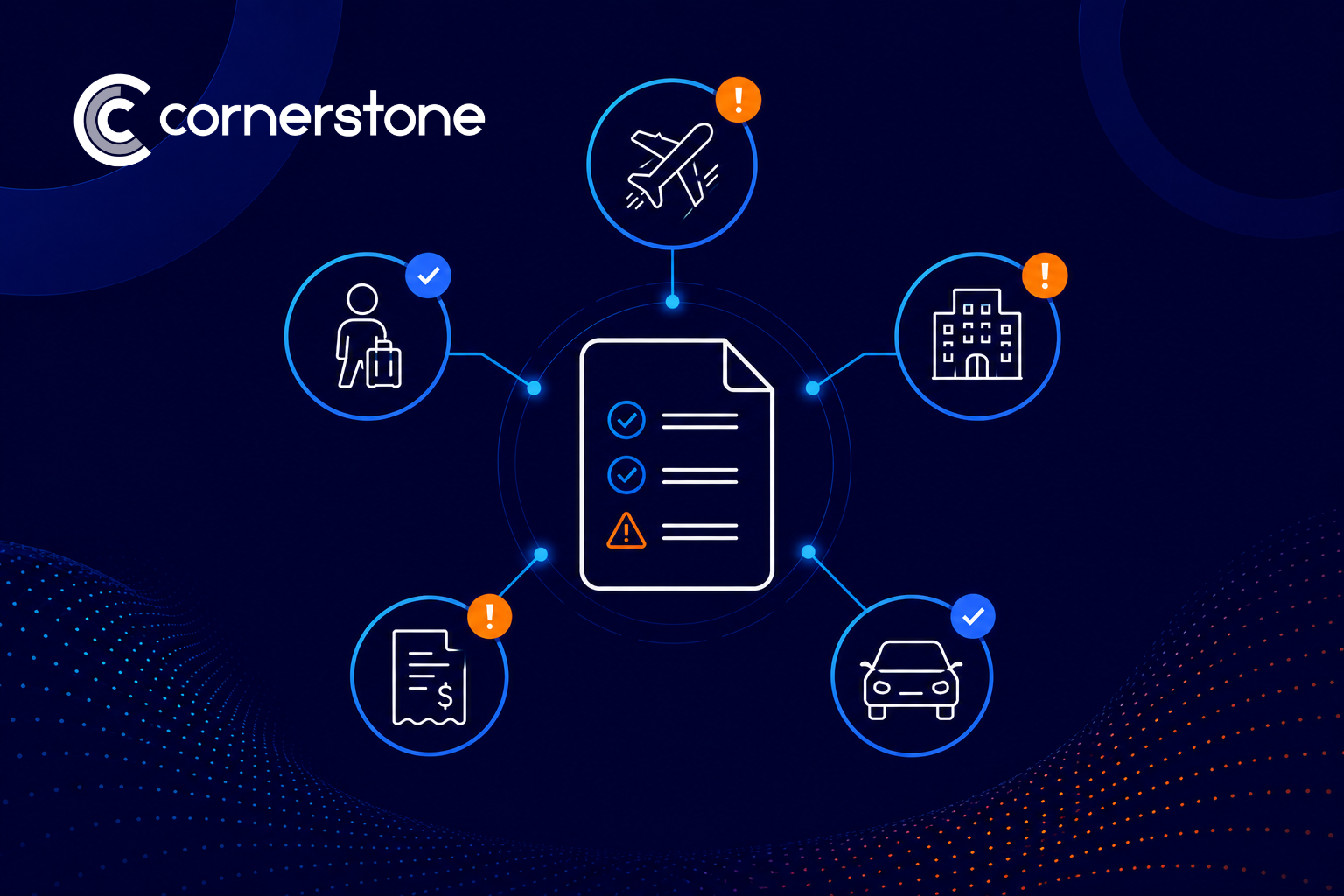
Most travel programs already have clear policies in place. The challenge is making sure bookings consistently align with those policies.
Most organizations already have a travel policy.
The rules are documented. Preferred suppliers are identified. Approval requirements are defined. Travelers know where they’re expected to book and what guidelines they should follow.
Yet policy exceptions continue to happen every day.
A traveler books outside a preferred supplier program. An approval is missed. A reservation doesn’t meet company requirements. An exception slips through unnoticed until someone reviews a report days or weeks later.
These situations are common, not because organizations lack policies, but because applying those policies consistently across hundreds or thousands of bookings is difficult.
As travel programs grow, compliance becomes less about having the right rules and more about having the ability to identify issues and address them before they impact costs, supplier agreements, or traveler experience.
The Gap Between Policy and Execution
Most travel policies cover familiar areas:
- Preferred airline, hotel, and car rental suppliers
- Booking and approval requirements
- Advance purchase guidelines
- Program-specific cost controls
The policy itself is usually not the challenge.
The challenge is ensuring those requirements are followed across every traveler, every reservation, and every supplier interaction.
For many organizations, that process still relies heavily on manual reviews, exception reports, and email follow-up.
Travel managers spend time answering questions such as:
- Was this reservation approved?
- Why wasn’t a preferred supplier used?
- Does this booking meet policy requirements?
- Is additional information needed?
- Who needs to review this exception?
Individually, these questions are manageable.
Across hundreds or thousands of reservations, they become a significant operational burden.
Why Reactive Compliance Creates Problems
When compliance issues are discovered after a reservation has already been ticketed or completed, organizations have fewer options to influence the outcome.
By that point, organizations may have already lost the opportunity to:
- Redirect spend to preferred suppliers
- Correct policy violations
- Capture missing approvals
- Prevent unnecessary costs
- Improve traveler decision-making
The result is often a combination of increased administrative effort, reduced visibility, and missed opportunities to improve program performance.
Many travel teams are left spending valuable time identifying issues instead of focusing on higher-value initiatives.
Bringing Compliance Closer to the Booking Process
A growing number of organizations are moving away from after-the-fact compliance reviews and toward earlier visibility into reservation activity.
The goal is simple: identify potential issues while there is still time to take action.
Cornerstone’s Policy Compliance Manager (PCM) was designed to support this approach.
PCM reviews reservations against policy requirements, approval rules, and supplier agreements as bookings are created or modified. When a reservation falls outside established guidelines, the appropriate people can be notified so the issue can be reviewed and addressed.
A typical workflow looks like this:
Booking Created
↓
Reservation Reviewed Against Policy Requirements
↓
Exception Identified
↓
Traveler and Approver Notified
↓
Decision Recorded
↓
Issue Resolved and Tracked
Rather than relying solely on reports generated after the fact, travel teams gain visibility into issues while they are still actionable.
How PCM Supports Travel Programs
Reservation Review
PCM evaluates reservations against the policies and business rules defined by your organization.
This may include:
- Airfare and hotel requirements
- Preferred supplier agreements
- Approval workflows
- Advance purchase policies
- Required traveler information
By automatically reviewing reservations, travel teams can reduce the time spent manually checking bookings and focus on the exceptions that require attention.
Exception Identification
When a reservation falls outside established guidelines, PCM flags the issue for review.
Common examples include:
- Missing approvals
- Out-of-policy hotel selections
- Non-preferred supplier usage
- Missign travler information
- Reservation discrepancies
Identifying these issues earlier creates more opportunities to resolve them before they lead to additional costs or operational challenges.
Communication and Approvals
Managing exceptions often requires coordination between travelers, managers, approvers, and travel teams.
PCM helps streamline that process by supporting automated notifications and approval workflows, reducing the need for manual follow-up and email exchanges.
Documentation and Audit Readiness
Every compliance decision creates a record.
Whether an exception is approved, denied, or modified, PCM maintains documentation that supports reporting, internal governance, and audit requirements.
Looking Beyond Individual Exceptions
While resolving individual compliance issues is important, many organizations are equally focused on understanding broader program trends.
There are several questions that can provide valuable insight into how a travel program is performing:
- Which policies generate the highest number of exceptions?
- Where are travelers struggling to comply?
- Which suppliers are seeing the strongest adoption?
- How quickly are approvals being completed?
- Where is the travel team spending the most time?
By understanding these patterns, organizations can make more informed decisions about policy design, traveler education, supplier strategy, and operational processes.
Compliance Should Support Program Performance
The purpose of travel policy is not simply to enforce rules.
It is to help organizations control costs, improve supplier adoption, reduce risk, and create a more consistent travel experience.
Achieving those outcomes requires more than a policy document. It requires visibility into reservation activity, timely identification of exceptions, and efficient workflows for resolving issues.
Policy Compliance Manager helps bring those pieces together, giving travel teams greater visibility into compliance activity while reducing the administrative effort required to manage it.
See PCM in Action
Learn how Policy Compliance Manager can help your organization improve policy compliance, reduce manual workload, and gain greater visibility into travel program performance.