
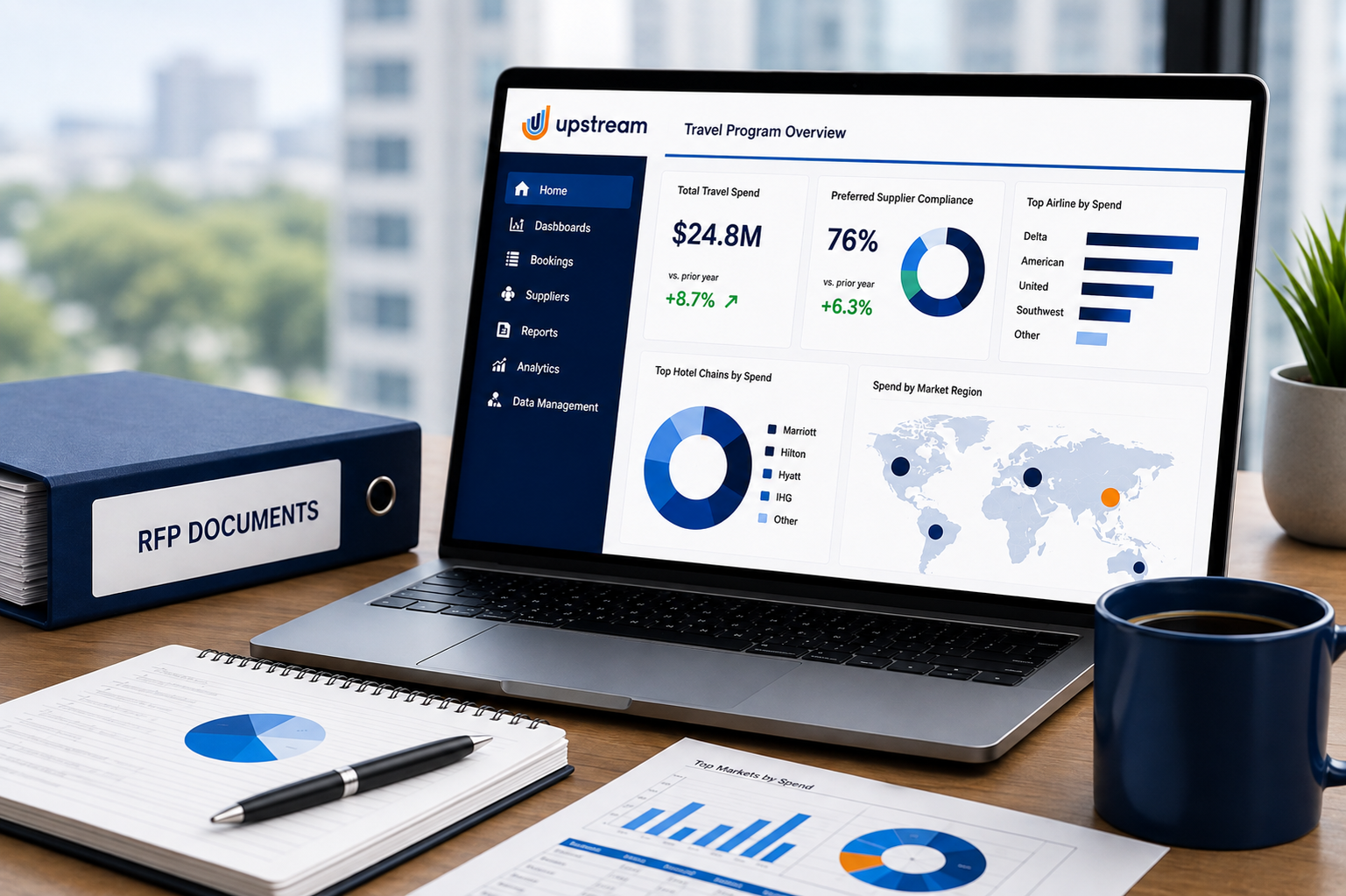
If you’ve been through a travel RFP, you know the work starts long before the document is sent to suppliers.
Before procurement can compare proposals or negotiate rates, someone has to answer a long list of questions. Where is the company spending the most? Which suppliers are being used? Are negotiated agreements driving bookings, or are travelers choosing other options?
Finding that information often takes longer than writing the RFP itself.
The information exists, but it’s spread across booking tools, expense systems, agency reports, supplier reports, and spreadsheets. Pulling everything together becomes a project of its own.
Every RFP Starts with the Same Questions
Before you can evaluate suppliers, you need a clear picture of how your travel program is performing today.
That usually means looking at questions like:
- Which airlines receive the most bookings?
- Which hotel brands account for the largest share of spend?
- Where are travelers booking outside preferred suppliers?
- Which markets generate the highest travel volume?
- How has travel changed since the last sourcing event?
The information helps identify where there are opportunities to negotiate and whether your current supplier agreements are still meeting your organization’s needs.
Gathering the Data Is Often the Hardest Part
Most travel programs already have the information they need for an RFP. The hard part is pulling it all together.
Reservation data may live in one system, expense data in another, and supplier reports somewhere else entirely. Before you can evaluate suppliers, you need to export the data, combine it, check it for accuracy, and make sure everything lines up.
Once everything is in one place, it’s much easier to see where negotiations should focus and whether your supplier agreements are delivering the results you expect.
Sourcing Doesn’t End When the Contract Is Signed
Selecting a supplier is one milestone, not the finish line.
Once new agreements are in place, travel teams still need to understand whether those decisions are producing the expected results.
After implementation, the focus shifts to performance.
- Are travelers booking with preferred suppliers?
- Are negotiated discounts appearing as expected?
- Has supplier market share changed?
- Which agreements should be reviewed before the next sourcing cycle?
The data you collect throughout the year makes the next RFP much easier to prepare. Programs that track supplier performance throughout the year spend less time rebuilding reports when sourcing season comes around again.
Spend More Time Evaluating Suppliers, Less Time Building Reports
If you’re preparing RFPs the same way you have in years past, rebuilding the same spreadsheets and pulling information from multiple systems, you may be missing opportunities hidden in your data.
Every data source brings something different to the table. Travel data shows where and how employees are moving. Expense data provides visibility into actual spend. Supplier data helps measure performance and value. Operational data adds context around how the program is functioning.
The real value comes when those data sources work together.
With connected data, teams can ask and answer more meaningful questions about their travel programs. Which suppliers deliver the most value? Where is there room to negotiate? How are travel patterns affecting spend? Are there opportunities or risks that aren’t visible when each data source is viewed on its own?
That’s where Upstream comes in.
Upstream brings travel, expense, supplier, and operational data together, allowing each source to complement the others. Instead of spending sourcing season assembling reports, teams can focus on evaluating supplier performance, identifying opportunities, preparing negotiations, and making more informed sourcing decisions.
And because that information is connected year-round, those insights don’t have to start and stop with RFP season.
A better RFP starts with understanding the full picture your data is already telling you.
Ready to simplify your next sourcing cycle?
See how Upstream can bring your travel, expense, supplier, and operational data together so your team can spend less time building reports and more time making informed sourcing decisions.